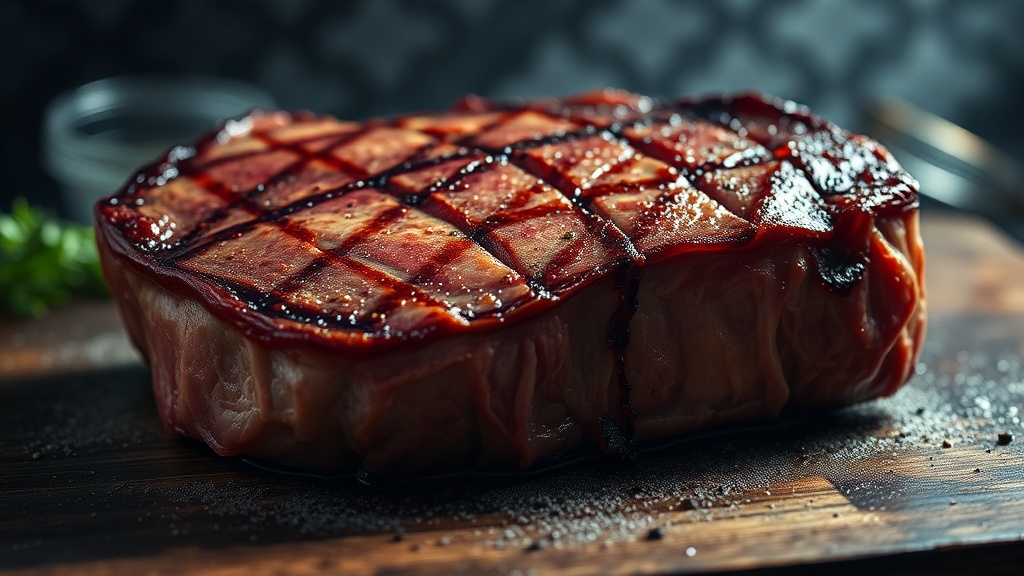
Letting Your Steak Rest: Why the Juice Redistribution Theory Is Wrong

Why Does Everyone Say Resting "Locks In" Juices?
For decades, cookbooks and cooking shows have repeated the same mantra: rest your meat so the juices redistribute. The story goes that cooking squeezes juices toward the center, and resting allows them to flow back throughout the meat. It sounds logical—except it is not quite how the science works. The real reason to rest meat has everything to do with temperature equilibrium and muscle fiber relaxation, not juice migration. Understanding what actually happens when your steak, chop, or roast sits on the cutting board will change how you cook forever. You will get better results with less guesswork—and you will stop worrying about losing precious moisture to your plate.
What Actually Happens When Meat Cooks
When meat hits a hot pan or grill, the muscle fibers contract. Think of them like tiny straws squeezing shut—this forces moisture outward. The exterior dehydrates and browns through the Maillard reaction (that delicious crust you want). Meanwhile, the interior heats up and the proteins tighten. This contraction is the real culprit behind dry meat, not some imaginary juice migration pattern.
Here is what most people get wrong: juices are not racing toward the center like swimmers in a pool. They are being actively squeezed out of the muscle cells throughout the entire piece of meat. The outer layers simply lose more because they are hotter. When you cut into meat immediately after cooking, you see liquid on the cutting board because the muscle fibers are still fully contracted and tense—like a squeezed sponge that has not been released.
How Long Should You Actually Let Meat Rest?
The answer depends on thickness, not weight. A thin pork chop needs less time than a thick ribeye, and a whole turkey needs far longer than either. For steaks and chops around one inch thick, five to ten minutes is usually sufficient. Roasts and larger cuts benefit from fifteen to thirty minutes—sometimes longer for really substantial pieces.
Temperature matters too. You want the internal temperature to stop rising (carryover cooking can bump it up five to fifteen degrees depending on size) and begin to fall slightly. This is when the muscle fibers relax and reabsorb some of the surface moisture. You can loosely tent meat with foil to keep it warm, but skip the tight wrapping—trapped steam softens that beautiful crust you worked so hard to create. For more guidance on precise temperatures, check out Serious Eats' breakdown of resting science.
Does Resting Really Keep Meat Juicier?
Yes—but not for the reasons your grandmother told you. Resting lets muscle fibers relax from their contracted state. When they relax, they can reabsorb some of the moisture that was squeezed to the surface during cooking. The meat also cools slightly, which reduces the pressure differential between the interior and exterior. Less pressure means less force pushing liquid out when you cut.
But here is the uncomfortable truth: you will still lose some juice when you slice rested meat. The difference is that unrested meat gushes liquid because the fibers are tense. Rested meat releases moisture more gradually. The total moisture loss is roughly the same either way—resting just changes how it leaves. For a deeper dive into the thermodynamics, America's Test Kitchen tested this extensively and found the differences more nuanced than most assume.
Which Cuts Benefit Most From Resting?
Thick cuts see the biggest improvement. A thin skirt steak or minute steak barely needs resting—you are slicing it against the grain anyway, and it cools so quickly that fiber relaxation happens fast. But a two-inch-thick ribeye or a whole beef tenderloin? Resting is non-negotiable. The thicker the meat, the more carryover cooking happens, and the more time the interior needs to settle.
Poultry follows similar rules. A chicken breast needs five minutes; a whole roasted chicken needs fifteen to twenty. Pork chops and roasts benefit significantly too. The one exception? Braised meats. Because they cook in liquid and are already saturated, resting matters less—though it still helps with temperature evenness.
What About Carryover Cooking?
This is the secret weapon of properly rested meat. When you pull a steak from a 500°F grill, the exterior is screaming hot while the center might be 125°F. Heat continues moving inward after cooking stops—this is carryover cooking. A thick steak can rise ten to fifteen degrees during resting. If you pull it at your target temperature, it will overshoot while resting.
Smart cooks pull meat five degrees below their target, accounting for this rise. The ThermoWorks guide to resting recommends using a leave-in thermometer to track this rise accurately. Without one, you are guessing—and guessing leads to overcooked meat more often than not.
Should You Rest Burgers and Thin Cuts?
Here is where tradition gets impractical. A thin burger patty or minute steak loses heat so rapidly that resting can leave it cold and unappetizing. For thin cuts, the compromise is simple: rest briefly—two to three minutes—just long enough that you are not burning your fingers. The muscle relaxation happens faster in thin meat anyway.
For smash burgers and similar thin preparations, skip the formal rest. The high surface area-to-thickness ratio means they cool quickly and the fiber relaxation happens almost instantly. Focus instead on cooking them fast and serving them hot.
Practical Tips for Better Resting
First, invest in a wire rack. Resting meat on a cutting board traps steam underneath, softening the bottom. A rack allows air circulation, preserving crust on all sides. Second, do not skip the loosely-tented foil for large roasts, but keep it loose—think blanket, not sleeping bag. Third, rest in a warm spot. A cold kitchen counter sucks heat away faster than a warm corner near (but not on) the stove.
Most importantly, use the resting time productively. Finish your sauce, dress your salad, warm your plates—whatever final tasks your meal needs. The meat is doing its own work; you should do yours. This mindset shift transforms resting from wasted time into key workflow.
Why Resting Temperature Matters More Than Time
Time recommendations are guidelines, not rules. The real metric is internal temperature stability. When the internal temp stops rising and begins to fall—usually dropping two to five degrees from its peak—that is your signal. The muscle fibers have relaxed, carryover cooking is complete, and the meat is ready to slice.
For precision cooks, this means a thermometer is non-negotiable. Timers cannot account for variations in starting temperature, cooking method, or meat thickness. A steak pulled from a screaming hot cast iron skillet carries more residual heat than one from a moderate oven—and rests differently because of it.