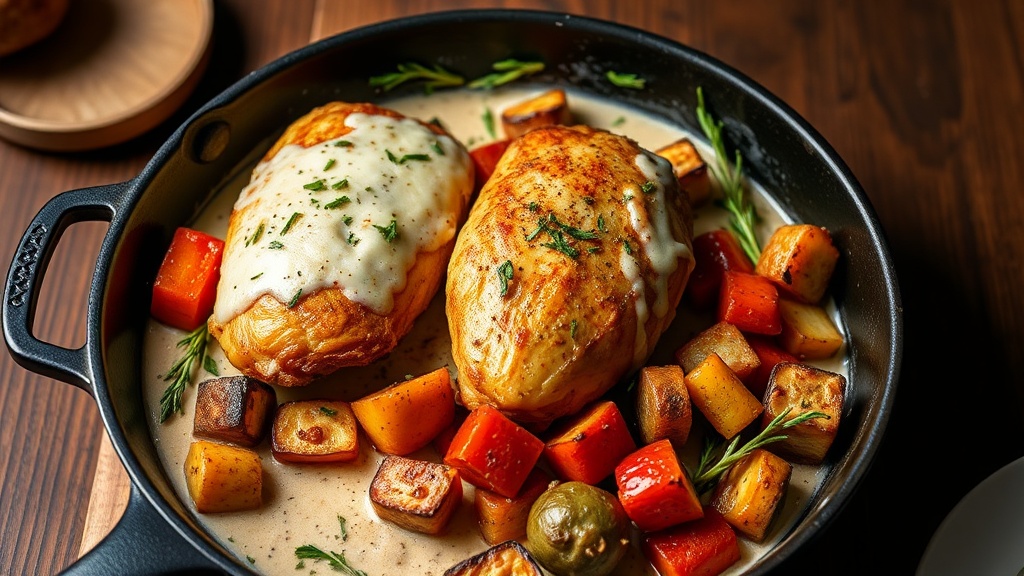
One-Pan Creamy Garlic Parmesan Chicken with Roasted Vegetables

This guide walks through a complete one-pan dinner that solves the weeknight cooking dilemma—minimal cleanup, maximum flavor, and a balanced meal that comes together in under 45 minutes. The combination of golden-seared chicken, a velvety garlic parmesan sauce, and caramelized roasted vegetables hits every note you want from a home-cooked dinner without the mountain of dishes that usually follows.
What Makes One-Pan Chicken Dinners So Popular?
The appeal is simple—one pan means one thing to wash. But there's more to it than lazy cleanup (though that's a legitimate perk). When chicken, vegetables, and sauce all cook together, something magical happens. The fond—the crispy, caramelized bits left after searing chicken—melts into the sauce and coats every vegetable with deep, savory flavor you can't replicate with separate components.
Here's the thing: one-pan meals aren't just about convenience. They're about building layers of flavor through technique. The chicken renders fat that seasons the vegetables. The vegetables release moisture that keeps the chicken juicy. The sauce deglazes the pan and captures every bit of flavor that would otherwise get scrubbed down the drain. It's efficient cooking that actually tastes better than the multi-pot alternative.
What Ingredients Do You Need for Creamy Garlic Parmesan Chicken?
You'll need bone-in, skin-on chicken thighs (about 1.5 pounds), a mix of hearty vegetables, pantry staples for the sauce, and good-quality parmesan. The ingredient list looks longer than it is—most items are kitchen basics you probably have on hand.
For the chicken and vegetables:
- 4-6 bone-in, skin-on chicken thighs (about 6-8 oz each)
- 1 pound baby potatoes, halved (Yukon Gold or red work beautifully)
- 1 pound broccoli florets (cut into bite-sized pieces)
- 1 red bell pepper, cut into 1-inch chunks
- 3 tablespoons olive oil
- 1 teaspoon smoked paprika
- Salt and black pepper
For the creamy garlic parmesan sauce:
- 4 tablespoons unsalted butter
- 6 garlic cloves, minced (don't use the pre-minced jar stuff—it lacks punch)
- 1 cup heavy cream
- 1 cup freshly grated Parmigiano-Reggiano (the real thing, not the green can)
- 1/2 cup chicken stock (Swanson or Pacific Foods organic both work well)
- 1 teaspoon Italian seasoning
- 1/2 teaspoon red pepper flakes (optional, but recommended)
- Fresh parsley for finishing
Worth noting: the quality of your parmesan matters more than you'd think. That pre-grated stuff in the green cylinder contains cellulose to prevent clumping, and it won't melt into the silky sauce you're after. Grab a wedge of real Parmigiano-Reggiano and grate it fresh. The difference in texture and flavor is night and day.
What Pan Works Best for One-Pan Chicken Recipes?
A 12-inch oven-safe skillet—cast iron or stainless steel—is non-negotiable for this recipe. Non-stick pans can't handle the high heat needed for proper searing, and they won't develop the fond that makes the sauce sing.
| Pan Type | Best For | Pros | Cons |
|---|---|---|---|
| Cast Iron (Lodge 12-inch) | High-heat searing, oven finishing | Excellent heat retention, develops superior crust, lasts generations | Heavy, requires seasoning, handle gets screaming hot |
| Stainless Steel (All-Clad D3) | Even browning, deglazing | Responsive heat control, dishwasher safe, no seasoning needed | Food sticks initially (that's the point—fond development), learning curve |
| Non-Stick (T-fal or similar) | Low-fat cooking, eggs | Easy cleanup, beginner-friendly | Can't handle high heat, no fond development, limited oven safety |
| Enamel Dutch Oven (Le Creuset) | Braising, saucy dishes | Even cooking, beautiful presentation, versatile | Expensive, heavy, slower to heat |
The catch? Size matters. A 10-inch skillet will crowd the chicken, and crowded chicken steams instead of sears. That pale, flabby skin is the enemy of flavor. Give each thigh breathing room—if your pan feels cramped, work in batches or use two pans (defeating the one-pan promise, but better than sad chicken).
How Do You Get Crispy Chicken Skin in a One-Pan Meal?
Pat the chicken completely dry, season aggressively, and don't touch it for the first 6-7 minutes of cooking. The skin needs uninterrupted contact with hot oil to render the fat and create that shattering crust.
Start by heating your skillet over medium-high heat until a drop of water sizzles and evaporates immediately. Add the olive oil, then place the chicken thighs skin-side down. Press gently with a spatula for the first 30 seconds—this ensures full contact. Now walk away. Seriously. The urge to peek is strong, but every time you lift that chicken, you're breaking the crust's formation.
After 6-7 minutes, flip the chicken. The skin should be deep golden and sound like a potato chip when you tap it. Remove the chicken to a plate (it's not cooked through yet—just seared). The rendered chicken fat left behind is liquid gold—don't you dare wipe that out.
What's the Secret to a Silky Garlic Parmesan Sauce?
The sauce comes together in the same pan, building on those crispy chicken drippings. This technique—called deglazing—transforms stuck-on bits into flavor.
Reduce the heat to medium and add the butter. Once melted, toss in the minced garlic and sauté for 30 seconds until fragrant (not brown—burnt garlic turns bitter fast). Pour in the chicken stock and scrape the pan bottom with a wooden spoon. Those brown bits will release and dissolve into the liquid. This is where restaurant-quality depth comes from.
Stir in the heavy cream and Italian seasoning. Let it simmer for 2-3 minutes until slightly reduced, then whisk in the grated parmesan a handful at a time. The sauce should coat the back of a spoon—thick enough to cling to chicken and vegetables, but not so thick it gloops. If it gets too thick, thin with a splash of stock. Too thin? Simmer another minute.
"The difference between home cooking and restaurant cooking often comes down to one thing: fearlessness with fat and salt. This sauce embraces both."
That said, taste your sauce before adding extra salt. Parmesan brings significant salinity, and you can always add more but can't take it back.
How Long Should You Roast Everything Together?
Once the sauce is ready, nestle the seared chicken back into the pan (skin-side up this time). Surround it with the vegetables, tossing them gently to coat in the sauce. The whole pan goes into a 400°F oven for 25-30 minutes.
The potatoes need the full time to become fork-tender. The broccoli will soften but maintain some bite—if you prefer it more tender, cut the florets smaller or add them 10 minutes into roasting. The bell peppers add sweetness and color contrast; they emerge slightly charred and deeply flavored.
You'll know it's done when the chicken reaches 165°F internal temperature and the sauce bubbles around the edges. Let it rest for 5 minutes before serving—this allows the juices to redistribute in the chicken and the sauce to thicken slightly.
What Should You Serve with One-Pan Creamy Chicken?
This dish is complete on its own—protein, vegetables, and sauce all accounted for. But if you're feeding serious appetites or want to stretch the meal, here are solid additions:
- Crusty bread: A warm baguette from a local bakery (or La Brea Bakery if you're buying grocery store) is perfect for sauce-sopping duty.
- Simple greens: An arugula salad with lemon vinaigrette cuts through the richness.
- Roasted garlic mashed potatoes: Only if you're going full comfort food—double starch is indulgent but delicious.
- Cauliflower rice: For a lighter option that still catches plenty of sauce.
For wine pairing, reach for a crisp white with enough acid to balance the cream. A Vermentino from Sardinia or Grüner Veltliner from Austria works beautifully. If you prefer red, keep it light—a Pinot Noir from Oregon's Willamette Valley won't overpower the dish.
How Do You Store and Reheat Leftovers?
Leftovers keep in an airtight container for 3-4 days in the refrigerator. The sauce will thicken considerably when cold—this is normal.
For reheating, the oven wins over the microwave every time. Place leftovers in an oven-safe dish, cover with foil, and warm at 350°F for 15-20 minutes. The microwave makes chicken rubbery and sauce greasy through uneven heating. If you're in a rush, use the microwave at 50% power in short bursts, stirring between each.
Freezing isn't ideal here—cream-based sauces tend to separate and become grainy when thawed. The dish is best enjoyed fresh or within a few days. If you must freeze, do so without the sauce and make fresh sauce when reheating.
What Variations Work with This Base Recipe?
Once you've mastered the technique, the flavor combinations are endless. Swap the parmesan for gruyère and add fresh thyme for a French twist. Use chorizo instead of chicken and swap the cream for crushed tomatoes for Spanish vibes. Go Greek with feta, lemon, and oregano instead of parmesan and Italian seasoning.
Vegetable swaps work too—Brussels sprouts (halved) take beautifully to high-heat roasting. Carrots and parsnips add sweetness. Cauliflower soaks up sauce like a dream. Just keep the total vegetable volume around 2 pounds and cut everything to similar sizes for even cooking.
Here's the thing about recipes like this—they're frameworks, not formulas. The technique matters more than the specific ingredients. Sear protein, build sauce in the same pan, roast with vegetables, finish with something acidic or fresh. Master that rhythm and you'll never need another one-pan recipe.
Pull this out on a Tuesday when you're tempted to order takeout. By the time the delivery app loads, you'll be pulling a pan of bubbling, golden perfection from the oven. The only thing left to wash is that single skillet—and maybe your fork, if you're feeling civilized.