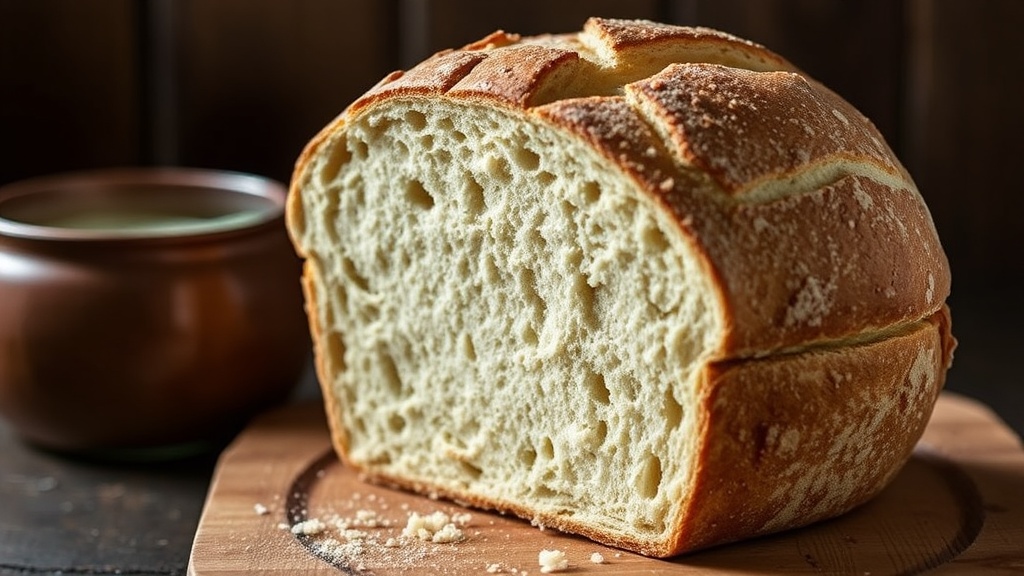
The Complete Beginner's Guide to Sourdough Bread

Sourdough bread transforms three simple ingredients—flour, water, and salt—into something far greater than the sum of its parts. This guide covers everything needed to bake that first crusty loaf: building a starter from scratch, understanding fermentation timing, shaping techniques, and troubleshooting the common pitfalls that trip up beginners. Whether the goal is a tangy country loaf for weekend sandwiches or the satisfaction of pulling homemade bread from the oven, the process is more forgiving than it appears.
What Exactly Is a Sourdough Starter and How Do You Make One?
A sourdough starter is a living culture of wild yeast and bacteria cultivated in flour and water. Unlike commercial yeast packets, this culture requires regular feeding and attention—but the flavor complexity it produces can't be replicated any other way.
Creating a starter takes about 7 to 10 days. Here's the thing: patience matters more than precision. Begin with 50 grams of whole wheat flour (King Arthur whole wheat works beautifully) and 50 grams of lukewarm water in a glass jar. Stir until combined, cover loosely, and let it sit at room temperature for 24 hours.
By day two or three, bubbles should appear. That's the wild yeast waking up. From day three onward, discard half the mixture each morning and feed with 50 grams all-purpose flour and 50 grams water. The discard step feels wasteful—until those discard crackers and pancakes enter the equation.
The starter is ready when it doubles in volume within 4 to 6 hours of feeding and passes the "float test"—a small dollop dropped in water should bob on the surface. At that point, it can live in the refrigerator and wake up once weekly for maintenance.
Why Does Sourdough Bread Take So Long to Make?
The extended timeline isn't arbitrary—it's biology. Sourdough relies on slow, natural fermentation rather than rapid commercial yeast multiplication. This slow process develops flavor, improves digestibility, and creates that characteristic chewy crumb and shattering crust.
A typical bake spans 24 to 48 hours from mixing to slicing, though most of that time requires no active work. The dough does the heavy lifting while the baker sleeps or runs errands.
| Stage | Time Required | What's Happening |
|---|---|---|
| Autolyse | 30 min - 2 hours | Flour hydrates; gluten begins developing without kneading |
| Bulk Fermentation | 4 - 12 hours | Yeast produces CO2; dough rises and develops structure |
| Proofing | 2 - 8 hours (or overnight in fridge) | Final rise; flavor deepens; crust develops complexity |
| Baking | 45 - 60 minutes | Maillard reaction creates crust; interior sets |
Worth noting: warmer kitchens (75-80°F) speed fermentation; cooler spaces slow it down. A Brod & Taylor folding proofer helps maintain consistent temperature, though the oven with the light on works in a pinch.
What Flour Should Beginners Use for Sourdough?
All-purpose flour produces excellent results for first-time bakers. While bread flour (higher protein) creates chewier textures and whole wheat adds nutty depth, starting simple prevents unnecessary complications.
That said, not all all-purpose flours perform equally. American all-purpose typically contains 10-12% protein—perfect for sourdough. Some European all-purpose flours behave more like American cake flour and won't develop adequate gluten structure. King Arthur all-purpose (11.7% protein) offers reliability that beginners appreciate.
For those wanting whole grain character without the density, substitute 10-20% of the white flour with whole wheat or rye. Bob's Red Mill dark rye flour brings remarkable depth—just a tablespoon in the starter keeps it vigorous too.
Storage matters. Flour should live in airtight containers away from heat and light. The OXO Good Grips POP containers with their satisfying button-seal keep flour fresh for months.
Hydration: The Baker's Percentage Explained
Bakers communicate recipes through percentages relative to flour weight. A 70% hydration dough uses 700 grams water for every 1000 grams flour. Beginners should start around 65-70%—wet enough for an open crumb, manageable enough to shape without tears.
Higher hydration (75-85%) produces those Instagram-worthy holes and custardy interiors but demands confident handling. The dough will seem impossibly slack at first. Over time, wet dough becomes familiar rather than frightening.
How Do You Shape and Score Sourdough Properly?
Shaping creates surface tension—that tight skin holding the loaf's structure. Without it, the dough spreads sideways instead of rising upward.
After bulk fermentation, gently tip the dough onto a lightly floured counter. Divide if making two loaves. For a round (boule), fold the edges toward the center, flip seam-side down, and rotate while tucking the bottom underneath. The dough should feel like a drum—tight and resistant.
For an oval (bâtard), the process starts similarly but ends with rolling the dough into a log, sealing the seam with the edge of your hand. Place shaped loaves seam-side up in floured proofing baskets (the Breadtopia oval bannetons hold their shape for years).
Scoring isn't decorative—though it can be beautiful. The cut controls where steam escapes during baking. A single decisive slash at a 45-degree angle, about 1/4-inch deep, allows proper expansion. A lame (the Wire Monkey lame remains the gold standard) creates cleaner cuts than a knife.
What's the Best Way to Bake Sourdough at Home?
Professional bakeries use steam-injected ovens. Home bakers simulate this with Dutch ovens—enameled cast iron pots that trap moisture from the dough itself. That steam keeps the crust soft during the initial expansion phase, allowing maximum "oven spring" (the final rise).
The method is straightforward: preheat the Dutch oven (Le Creuset and Lodge work equally well) at 450-500°F for at least 45 minutes. Carefully transfer the proofed dough onto parchment, score, then lower it into the hot pot. Cover and bake 20 minutes, then remove the lid for 20-25 minutes to develop color.
The catch? Every oven behaves differently. Some run hot; others have cold spots. The first few loaves are experiments in understanding your specific equipment. A $15 ThermoWorks ThermoPen removes guesswork—the internal temperature should reach 205-210°F when fully baked.
"The bread doesn't care about your schedule. It cares about temperature and time."
That's not discouragement—it's liberation. Once the rhythm becomes intuitive, sourdough fits around life rather than dominating it.
Common Beginner Mistakes (And How to Avoid Them)
- Under-fermented dough: Dense, gummy crumb with large holes near the crust. Solution: extend bulk fermentation until the dough feels airy and jiggly.
- Over-proofed dough: Flat, spread-out loaf that doesn't spring in the oven. Solution: use the poke test—dough should slowly spring back, not collapse.
- Insufficient steam: Thick, hard crust that inhibits rise. Solution: ensure the Dutch oven seals properly; add ice cubes if needed.
- Cutting too soon: Gummy interior despite proper baking. Solution: wait at least one hour—preferably two—before slicing. The crumb structure continues setting as the loaf cools.
Here's the thing about sourdough: even the "failures" taste good. A dense loaf becomes excellent toast. A misshapen boule still impresses at dinner parties. The learning curve exists—but it's delicious the entire way.
How Do You Store and Use Leftover Sourdough?
Fresh sourdough stays good at room temperature for 3-4 days in a paper bag or bread box—never the refrigerator, which accelerates staling through retrogradation (starch recrystallization). For longer storage, slice and freeze in a sealed bag. Toast individual slices straight from frozen.
Sturdy sourdough makes exceptional French toast, croutons, and stuffing. Day-old bread absorbs sauces beautifully in panzanella or ribollita. The sour tang complements sharp cheeses and cured meats in ways commercial bread cannot match.
By the third or fourth bake, patterns emerge. The starter behaves predictably. Hands remember the folding rhythm without conscious thought. What began as chemistry experiment becomes comfortable ritual—the weekly gift of bread to yourself and whoever shares your table.