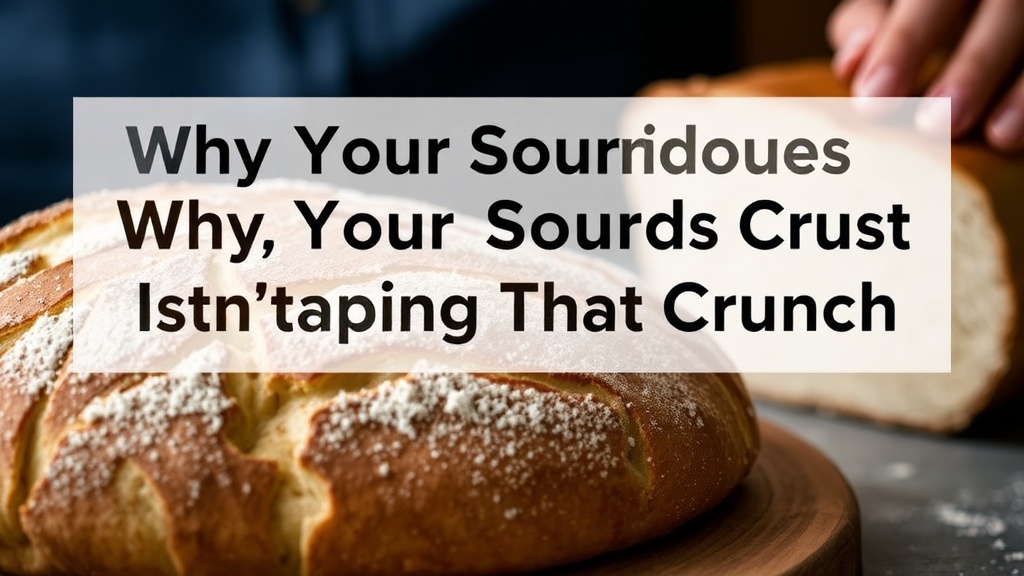
Why Your Sourdough Crust Isn't Developing That Perfect Crunch

The physics of a crisp crust-why does it matter?
Recent studies in food rheology suggest that the structural integrity of a bread crust is almost entirely dependent on the rate of moisture evaporation during the final stages of baking. If you've ever pulled a loaf from the oven only to find it has a soft, leathery skin instead of that satisfying, glass-like shatter, you aren't alone. A proper crust isn't just about texture; it's about how the bread interacts with your palate. A hard, crusty exterior provides a structural contrast to the airy, soft crumb inside, making every bite more dynamic. When the crust stays soft, the bread often feels stale much faster because the moisture from the interior migrates outward, turning the exterior gummy.
Most home bakers struggle with this because they treat the oven as a static environment. In reality, a bread oven is a high-stakes laboratory of heat, steam, and humidity. If you don't manage these three variables with precision, you'll end up with a loaf that looks beautiful but lacks the professional bite we all crave. We're looking at the interplay between temperature, steam duration, and the chemical breakdown of starches during the bake.
Can you bake sourdough without a Dutch oven?
The short answer is yes, but you'll need to work a bit harder to mimic the steam environment of a professional deck oven. The traditional method involves using a heavy, lidded pot—usually cast iron—to trap the steam released by the dough itself. This steam keeps the surface of the dough supple, allowing for maximum expansion (or "oven spring") before the crust sets. Without this moisture, the crust hardens too quickly, trapping the dough and resulting in a dense, heavy loaf.
If you don't own a Dutch oven, you might try the steam tray method. This involves placing a cast iron skillet or a baking stone on the bottom rack and pouring boiling water into a separate tray when you slide your bread in. It's a bit more chaotic (watch out for the steam burns!), but it works. For those who want a more technical deep dive into how starch gelatinization works, the Exploratorium's resources on bread structure provide excellent insight into the physical changes occurring inside your loaf.
One mistake I see constantly is pulling the lid off too early. If you remove the lid at the twenty-minute mark when the loaf hasn't reached its full volume, you'll lose that window of elasticity. You want to keep that lid on until the loaf has reached its maximum height and the surface has begun to develop a light, golden hue. This ensures the crust remains flexible during the most critical part of the bake.
Does sourdough crust thickness depend on hydration?
Hydration levels—the ratio of water to flour—have a massive impact on the final texture, though not always in the way you might expect. High-hydration doughs (those with more water relative to flour) often produce a much more open, airy crumb, but they can also lead to a thinner, more delicate crust if not handled correctly. If your dough is extremely wet, it might struggle to hold its shape, leading to a flatter loaf with a thinner, more translucent crust.
However, the real secret to a thick, crunchy crust isn't just the water in the dough; it's the water in the air. During the first half of the bake, the steam prevents the crust from drying out too quickly. This allows the starches on the surface to gelatinize—a process where the starch granules absorb water and swell. This creates a thin layer of gel that eventually dries out into the crispy, crunchy shell we love. Without that steam, you're just baking dry bread, not a crusty loaf.
If you're interested in the more chemical side of grain and water interaction, the King Arthur Baking blog offers extensive technical articles on how different flour types and hydration levels change the structural outcome of your bread. It's a rabbit hole, but a rewarding one for any serious baker.
Common culprits for a soft crust
If your bread is consistently coming out soft or even slightly soggy, check these three things:
- The Oven Temperature: If your oven isn't hot enough, the crust won't develop the necessary caramelization (the Maillard reaction) that creates flavor and hardness.
- The Steam Duration: You might be removing the steam too soon. Try extending the lid-on period by five minutes.
- The Cooling Process: This is the one people often ignore. If you cut into a hot loaf of bread, the steam escapes immediately, and the internal moisture will soak into the crust, making it soft and gummy. Always wait at least two hours before slicing.
I once tried to rush a loaf of sourdough by slicing it while it was still steaming. It was a disaster—the interior was still essentially a thick paste, and the crust had turned into a rubbery mess within minutes. Patience is a literal ingredient in baking.
Tools to improve your crust quality
While you can bake with basic tools, a few specific items can make a massive difference in the consistency of your results. A digital scale is non-negotiable; measuring flour by volume (cups) is far too imprecise for the level of control required for high-quality sourdough. A heavy-duty lame (a specialized razor blade) also helps. A clean, decisive slash on the top of the dough directs the expansion, preventing the bread from bursting in unintended places.
Another tool that can change the game is a specialized bread stone or a heavy baking steel. These tools hold a massive amount of thermal energy, which helps create a burst of heat the moment the dough hits the oven. This sudden increase in temperature is vital for that initial burst of growth. If you're using a standard baking sheet, you're missing out on the thermal mass needed for a professional-grade crust.
| Problem | Likely Cause | Solution |
|---|---|---|
| Leathery Crust | Too much steam or too little heat | Increase oven temperature or shorten steam time |
| Thin/Weak Crust | Low hydration or low heat | Increase water in dough or use a Dutch oven |
| Soft/Soggy Crust | Cutting too early | Wait for the loaf to reach room temperature |
Ultimately, baking a perfect loaf is a conversation between you and your oven. You have to learn how to listen to the bread. Does it crackle when it comes out? That's the sound of a successful bake. If it's silent and soft, you've got more work to do on your steam management and temperature control.