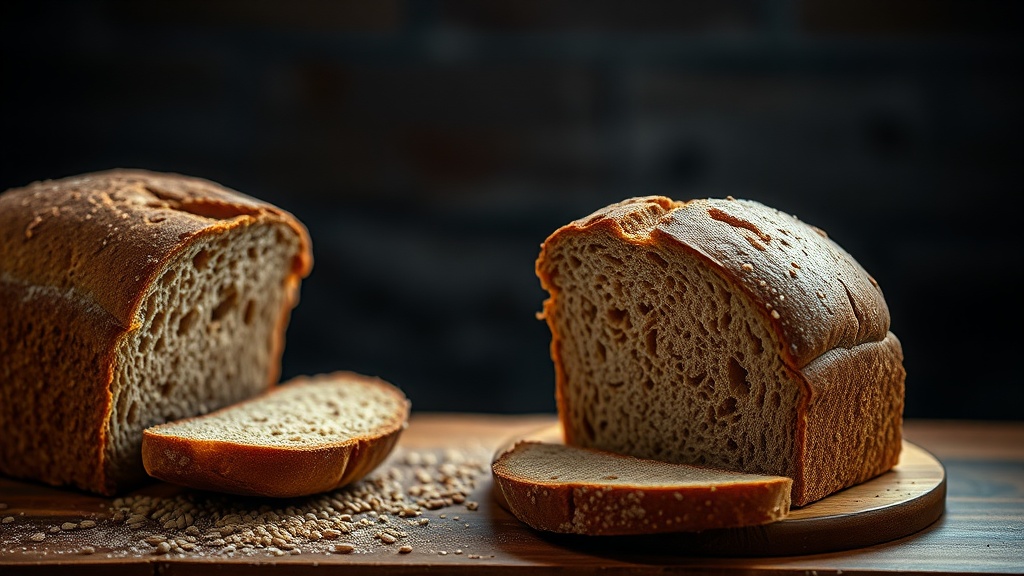
Why Your Whole Grain Bread is Dense and Heavy

Understanding the Physics of Whole Grain Dough
Most people don't realize that a single gram of bran can act like a tiny blade, slicing through the delicate gluten strands that hold bread together. This is why your home-baked whole grain loaf often ends up looking more like a heavy brick than a light, airy loaf. When you swap white flour for whole wheat or rye, you aren't just changing the flavor; you're changing the entire structural integrity of your dough. The bran particles in whole grains are sharp and abrasive. If they aren't managed correctly, they disrupt the fermentation process and prevent the bread from rising properly.
To get a better result, you have to look at the hydration levels and the way you handle the dough. Whole grain flours absorb significantly more water than refined flours. If your dough feels too stiff, it's likely because the bran is thirsty, and without enough moisture, the yeast can't produce the gases needed for a proper rise. This leads to that dense, gummy texture that many home bakers struggle to avoid. It's a common frustration, but it's entirely preventable with a bit of patience and a tweak to your standard routine.
Can You Fix Dense Whole Grain Bread?
The short answer is yes, and it starts with the way you treat your flour. One of the most effective methods is to pre-hydrate your flour before you even start mixing. This is often called the "autolyse" method in professional bakeries. By mixing your flour and water and letting it sit for thirty minutes to an hour before adding salt or yeast, you soften the bran. This makes the bran less abrasive and allows the gluten to develop without as much interference. You can read more about the technical aspects of dough development at King Arthur Baking, where they discuss many of these hydration techniques.
Another way to fix the density issue is to adjust your mixing method. If you're using a high-speed stand mixer, you might actually be overworking the dough, causing the gluten to break down prematurely. Instead, try a long, slow fermentation. A slower rise at a cooler temperature allows the yeast to work steadily, building a stronger structure. If you're looking for scientific data on how grain structure affects bread, the ScienceDirect database has extensive research on cereal chemistry and starch gelatinization.
Don't forget the role of salt. While it's often used to control yeast activity, it also strengthens the gluten network. If you're being too shy with your salt, your dough might be too weak to hold the gas produced during fermentation. A precise measurement is vital here. You're not just seasoning the bread; you're building a structural scaffold.
How Much Water Does Whole Wheat Flour Need?
This is the question that haunts many bakers. A standard white bread recipe won't work when you swap in whole wheat. You'll need to increase the water content. A good rule of thumb is to add about 5% to 10% more water than the recipe calls for. If the recipe asks for 350ml of water for white flour, try starting with 375ml for your whole grain version. This extra moisture ensures the bran stays soft and the dough remains extensible.
I've found that using a digital scale for everything—including water—is a much better approach than using measuring cups. Volumetric measurements are far too inconsistent for bread baking. If you want to see how different hydration levels change the crumb of a loaf, look into the "high hydration" methods used in sourdough baking. Even a small increase in water can lead to a much more open and light interior.
Common Mistakes to Avoid
- Not enough kneading: Whole grain dough requires more effort to develop strength. If you stop too early, the bread won't have the structural integrity to lift.
- Using old flour: Whole grain flour contains oils that can go rancid. If your flour smells slightly off or "dusty," it's going to produce a heavy, unpleasant loaf.
- Ignoring the temperature: If your kitchen is cold, your dough will rise slowly, and the bran might settle before the bubbles can lift it.
If you find your bread is still coming out heavy, check your yeast. If your yeast is old, it won't have the strength to push against the heavy bran. It's always a good idea to test your yeast in warm water before adding it to your flour to ensure it's still active. A healthy, active yeast culture is your best friend when working with the heavy, complex ingredients found in whole-grain baking.
The Importance of Sifting and Grinding
If you're making your own flour from scratch, the way you grind the grain matters immensely. A very fine grind will behave more like a commercial whole wheat flour, while a coarse grind will behave more like a rustic, hearty flour. For a lighter loaf, aim for a finer grind. This reduces the "cutting" action of the bran and allows the dough to rise more easily. It's a small detail, but it makes a massive difference in the final texture of your loaf.
It's also worth noting that some people prefer to "refresh" their flour. This involves letting the flour sit with some of the water from the recipe for a while before mixing. This step-by-step approach ensures that the flour is fully saturated, which prevents the bread from feeling dry or crumbly once it's baked. It's a technique that requires a bit of time, but the results are well worth the wait.