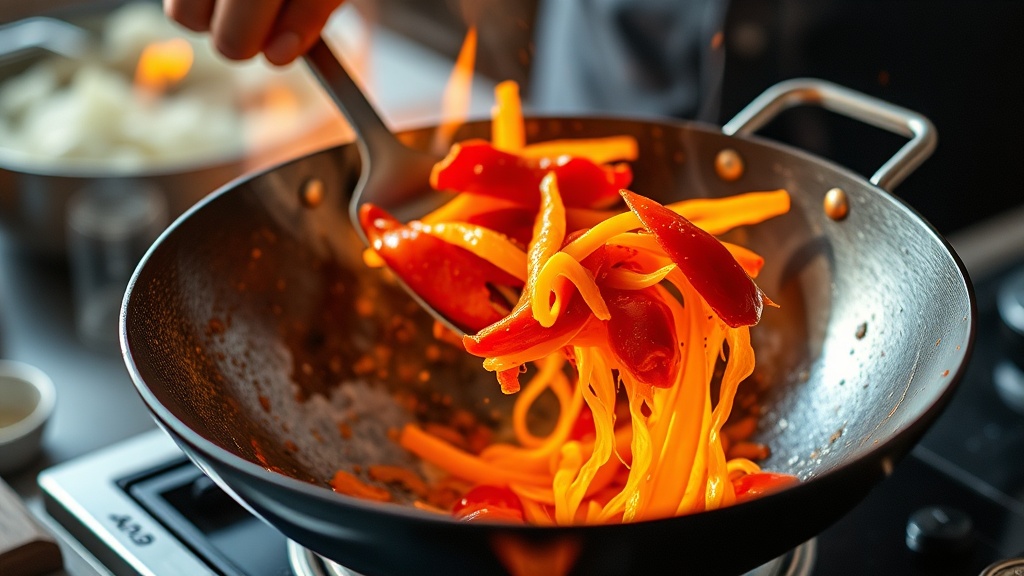
Sizzling Wok Techniques for Better Home Stir Fry

Ever wonder why your home stir fry tastes soggy and dull compared to the vibrant, smoky dishes you get at a restaurant? This post breaks down the specific heat management, pan preparation, and movement techniques required to master the wok at home. You'll learn how to control temperature, choose the right oils, and execute the proper tossing motions to achieve that coveted smoky flavor.
Why is my stir fry soggy instead of crispy?
Stir fry becomes soggy primarily because of two things: overcrowding the pan and using too much moisture. When you pile too many ingredients into a wok at once, the temperature drops instantly. Instead of searing, the food begins to steam in its own juices. You want high, dry heat to evaporate moisture rapidly, not a slow simmer in vegetable liquid.
To prevent this, work in batches. If you're making a massive batch of broccoli and shrimp, cook the shrimp first, set it aside, then cook the broccoli. This keeps the heat high and the textures crisp. It's a simple rule, but most home cooks ignore it because they want everything in the pan at once. Don't fall into that trap.
Another culprit is the type of oil you're using. If you use extra virgin olive oil, you're going to have a bad time. Most vegetable oils have a low smoke point, but for a wok, you need something that can handle the heat without breaking down into bitter smoke. I always reach for peanut oil or grapeseed oil because they handle high temperatures much better than butter or standard olive oil.
If you want to look up the science behind why certain fats work better at high temperatures, check out the data on smoke points on Wikipedia. It's a fundamental part of cooking physics.
The Importance of Heat and Pan Material
The type of wok you own dictates how much control you actually have over the cooking process. If you're using a non-stick pan from a brand like T-fal, you're actually limiting your ability to reach high-end heat. Non-stick coatings are great for eggs, but they can't handle the intense, direct flame required for true stir frying.
A carbon steel wok is the gold standard for a reason. It's relatively inexpensive and, once seasoned properly, develops a natural non-stick surface that actually benefits from the heat. Unlike cast iron, which is heavy and holds heat slowly, carbon steel responds almost instantly to changes in your burner settings. This responsiveness is what allows you to move from a high-heat sear to a quick tempering of sauces.
Here is a quick comparison of common cooking vessels to help you decide what fits your kitchen needs:
| Wok/Pan Type | Heat Response | Best Use Case | Durability |
|---|---|---|---|
| Carbon Steel Wok | Instant/Very High | Traditional stir fry, high-heat searing | High (if seasoned) |
| Cast Iron Wok | Slow/Very High | Slow-cooked stews or heavy searing | Extremely High |
| Non-Stick Wok | Moderate | Beginners or delicate proteins | Low (coating wears out) |
| Stainless Steel | Medium/Fast | General sautéing | Very High |
How much oil should I use for stir frying?
You only need enough oil to lightly coat the bottom of the wok, usually about one to two tablespoons for a standard batch. It's a common mistake to treat a wok like a deep fryer. If you use too much oil, the ingredients will fry rather than stir-fry, and you'll end up with a greasy, heavy meal rather than a light, crisp one.
The oil serves two purposes: it conducts heat to the food and prevents sticking. Once the oil is shimmering and just starting to produce a faint wisp of smoke, it's time to add your aromatics. Aromatics like garlic, ginger, and scallions burn incredibly fast. If you add them too early, they'll turn bitter and black before your protein even hits the pan.
I've found that adding a tiny bit of toasted sesame oil at the very end of the process—after the heat is off—provides a much better flavor profile than trying to cook with it throughout. It adds that nutty aroma without burning the delicate oils.
Mastering the "Wok Hei" at Home
Wok hei is a Cantonese term that translates to "breath of the wok." It refers to that specific charred, smoky flavor that defines professional-grade stir fry. While it's difficult to replicate perfectly on a standard electric stovetop, you can get much closer by focusing on heat and movement.
To get closer to that flavor, you need to keep the food moving constantly. This isn't just about "stirring"; it's about the toss. If the food sits in one spot, it will burn. If it moves too much, it won't sear. You're looking for a rhythm. The constant motion ensures that every surface of the vegetable or meat is hit by the intense heat of the pan's bottom and sides.
If you're working with a gas stove, you can use the flame to your advantage. Moving the wok slightly off the center of the burner allows you to control the heat zones. This is a technique used by professional chefs to create different textures within the same pan. High heat for the sear, lower heat for the sauce integration.
- Preheat the Wok: Heat the empty wok until it's smoking slightly.
- Add Oil: Add your high-smoke-point oil and swirl it to coat.
- Aromatics: Add garlic, ginger, or chili. Stir for only 10-15 seconds.
- Proteins: Add meat or tofu. Let it sear for a moment, then toss.
- Vegetables: Add the bulk of your vegetables. Keep the heat high.
- Sauce/Finish: Add your sauce and a splash of water if needed. Toss quickly to coat.
Is it better to use a wok or a skillet?
A wok is superior for stir frying because its shape directs heat and moisture more effectively than a flat-bottomed skillet. The high, sloping sides allow for more vigorous tossing and better heat distribution. In a skillet, the moisture from your vegetables often pools in the center, leading to that dreaded "boiled vegetable" texture. In a wok, the moisture is pushed to the edges and evaporates more efficiently.
That said, if you're working with an induction cooktop, a traditional round-bottomed wok might be a struggle. You'll likely need a flat-bottomed version or a specialized induction-compatible wok to ensure even heat transfer. Most modern induction burners are quite picky about the surface contact of your cookware.
For those who are just starting out, I actually recommend a flat-bottomed carbon steel wok. It gives you the benefits of the material and the shape, but it's much more forgiving on standard home ranges. It's a middle ground that won't leave you frustrated by uneven cooking.
If you're interested in the technical aspects of how different heat sources affect cooking, the USDA's food safety guidelines offer great context on how temperature affects the cooking of different proteins, which is a vital part of not undercooking your meat in a high-speed stir fry.
When you're prepping your ingredients, remember that consistency is everything. If your pieces of chicken are different sizes, the small ones will be rubbery by the time the large ones are cooked. This is why precision in your knife work actually matters for the final texture of the dish. It's not just about aesthetics; it's about even cooking times.
If you find yourself making a lot of quick, high-heat meals, you might also enjoy exploring one-pan dinner recipes that utilize similar high-heat techniques to save you time on cleanup. It's all about working smarter, not harder, in the kitchen.
Once you get the hang of the rhythm, you'll stop seeing the wok as a daunting piece of equipment and start seeing it as a tool for speed. There's nothing quite like the feeling of a perfectly executed toss where the ingredients fly through the air and land back in the pan, perfectly seared and glistening with sauce.